

When you hear the word agriculture, what comes to mind?
Perhaps you picture a farmer planting crops, tending livestock or working with a tractor.
Farming is an important part of agriculture, but the agricultural sector is much bigger than the farm itself.
Before food reaches your plate, people may have researched the crop, tested the soil, designed machinery, developed better seeds, analysed market prices, processed the food, arranged transportation, provided financing, developed software or advised farmers.
This means that a person can build a career in agriculture without becoming a farmer.
If you enjoy science, technology, engineering, business, economics, communication or working with data, there may be an agricultural career that matches your interests.
1. Agricultural Engineer
Agricultural engineers apply engineering principles to agricultural problems.
They may work on agricultural machinery, irrigation and drainage systems, processing and storage equipment, farm structures, soil and water conservation or other systems used in agriculture.

For example, an agricultural engineer could help design a more efficient irrigation system or equipment for processing harvested crops.
Agricultural engineering programmes in Nigeria cover areas including machinery, irrigation, drainage, agricultural processing and storage, soil and water conservation, structures and computer modelling of agricultural systems.
Useful interests and skills: Mathematics, Physics, technology, design and problem-solving.
Possible course of study: Agricultural Engineering, Agricultural and Bioresources Engineering or a related engineering programme.
2. Food Scientist or Food Technologist
Agriculture does not end when crops are harvested, or animals are raised.
Food scientists and technologists study what happens to agricultural products afterwards. They may work in food processing, preservation, food safety, quality control and the development of new food products.

They can work in laboratories, food-processing companies, research institutions and government agencies.
Agricultural and food scientists can specialise in areas including food science, plant science, soil science and animal science.
Useful interests and skills: Biology, Chemistry, experimentation, food and laboratory work.
Possible course of study: Food Science and Technology or related programmes.
3. Agricultural Economist
Agricultural economists apply economics to agriculture and food systems.
They may study questions such as:
Why are food prices rising?
Is an agricultural project likely to be profitable?
How can farmers obtain affordable credit?
What happens when the supply of a particular crop falls?
They can work in government, research, agribusinesses, financial institutions and development organisations.

At the University of Nigeria, for example, Agricultural Economics includes agricultural finance, agribusiness and marketing, farm management, econometrics, project appraisal, policy and planning.
Useful interests and skills: Economics, Mathematics, Statistics, research and problem-solving.
Possible course of study: Agricultural Economics, Agribusiness or a related programme.
4. Agribusiness Manager
Agriculture is also a business.
Agribusiness managers may help manage companies involved in food production, processing, agricultural inputs, distribution, equipment and other parts of the agricultural value chain.

Their work can involve planning, finance, operations, marketing and business development.
Useful interests and skills: Business Studies, Economics, Mathematics, communication and leadership.
Possible course of study: Agribusiness, Agricultural Economics, Business Administration or another relevant programme.
5. Soil Scientist
Healthy crops depend heavily on the soil in which they grow.
Soil scientists study the physical, chemical and biological properties of soils. Their work can contribute to soil fertility management, conservation, land-use decisions and agricultural production.

Soil and plant scientists are recognised specialisations within agricultural science and may work in research, government, crop production and related industries.
Useful interests and skills: Agricultural Science, Chemistry, Biology, Geography and environmental science.
Possible course of study: Soil Science, Agronomy or related agricultural programmes.
6. Crop Scientist or Plant Breeder
Crop scientists study plants used in agriculture.
Some specialise in plant breeding, where they work on developing crop varieties with desirable characteristics. Others work in agronomy, crop protection, plant pathology or related areas.

This can involve laboratory research, field trials and analysing agricultural data.
Useful interests and skills: Biology, Agricultural Science, Chemistry, research and data analysis.
Possible course of study: Crop Science, Agronomy, Plant Science or related programmes.
7. Agricultural Extension Officer
Scientists and researchers can develop excellent agricultural ideas, but those ideas have limited impact if farmers cannot use them.
That’s where agricultural extension comes in.
Extension professionals help communicate useful research, technologies and agricultural practices to farmers and rural communities. They can also help researchers and policymakers understand problems farmers are experiencing.
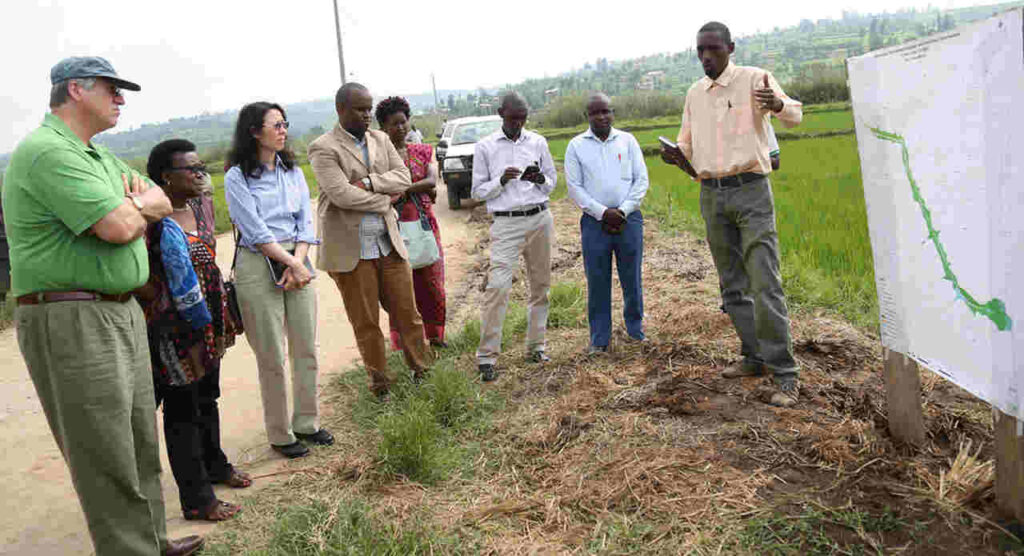
Nigerian universities offer dedicated Agricultural Extension programmes covering communication, extension teaching methods, rural development, research and technological change in agriculture.
Useful interests and skills: Agricultural Science, communication, teaching, problem-solving and working with people.
Possible course of study: Agricultural Extension, Agricultural Extension and Rural Development or related programmes.
8. Agricultural Finance Specialist
Farmers and agricultural businesses often need money to purchase equipment, expand operations, process products or invest in new projects.
Agricultural finance specialists may work with banks, development-finance institutions, cooperatives, agribusinesses and other organisations that provide or manage agricultural financing.
This isn’t an imaginary connection between banking and agriculture: Nigerian Agricultural Economics programmes explicitly include agricultural finance and identify banking and credit-related employment among their career paths.
Useful interests and skills: Economics, Mathematics, accounting, finance and analytical thinking.
Possible course of study: Agricultural Economics, Economics, Finance, Accounting or related programmes.
9. Agricultural Insurance Specialist
Agriculture involves risks.
Floods, droughts, diseases, pests and other events can cause serious losses.
Agricultural insurance professionals help assess these risks and develop or manage insurance products designed for agricultural businesses and producers.
Their work combines knowledge of agriculture, risk, finance and insurance.
Useful interests and skills: Mathematics, Economics, Agricultural Science, Statistics and risk analysis.
Possible course of study: Insurance, Actuarial Science, Agricultural Economics, Economics or related fields.
10. Agricultural Supply Chain and Logistics Specialist
Growing food is only part of the challenge.
Agricultural products also need to be collected, stored, transported, processed and delivered to markets while limiting delays, spoilage and unnecessary costs.

Supply-chain and logistics professionals help coordinate these activities.
Someone in this field might work with food processors, supermarkets, exporters, logistics companies, warehouses or agribusinesses.
Useful interests and skills: Business, Geography, Mathematics, organisation and problem-solving.
Possible course of study: Supply Chain Management, Logistics, Agricultural Economics, Business Administration or related programmes.
11. Agricultural Marketing Specialist
Agricultural products need buyers.
Agricultural marketing specialists may research markets, understand consumer behaviour, develop marketing strategies, promote products and help businesses connect agricultural goods with customers.
Agricultural marketing and agribusiness are established areas within Agricultural Economics programmes in Nigeria.
Useful interests and skills: Economics, Business Studies, communication, creativity and data analysis.
Possible course of study: Marketing, Agricultural Economics, Agribusiness or related programmes.
12. Agricultural Data Analyst
Modern agriculture produces a lot of data.
There can be information about rainfall, crop yields, soil conditions, prices, transportation, pests, satellite observations and agricultural markets.

Data analysts can help organisations turn that information into useful decisions.
For example, agricultural data could be used to compare crop performance, identify market patterns or understand how weather conditions affect production.
Agricultural programmes increasingly incorporate statistics, quantitative methods, computing and econometrics alongside traditional agricultural subjects.
Useful interests and skills: Mathematics, Statistics, Computer Science, spreadsheets, databases and data visualisation.
Possible course of study: Statistics, Data Science, Computer Science, Agricultural Economics or another relevant field.
13. Agritech Software Developer
A programmer can work in agriculture too.
Agritech simply refers to the application of technology to agricultural and food-system problems.

Software developers might build systems for:
- agricultural marketplaces;
- farm record keeping;
- weather information;
- payments;
- logistics;
- agricultural finance;
- livestock management;
- extension services; or
- agricultural data collection.
This career illustrates an important point: you don’t necessarily have to study Agriculture to eventually work in the agricultural sector.
Useful interests and skills: Computer Science, Mathematics, coding, design and problem-solving.
Possible course of study: Computer Science, Software Engineering, Information Technology or related programmes.
14. Agricultural Policy Analyst
Decisions made by governments can affect food prices, agricultural trade, rural communities, financing, land use and food security.

Agricultural policy analysts research these issues and help governments, research organisations, development agencies and other institutions understand the possible effects of different policies.
Agricultural policy, planning, project appraisal and development are established areas of Agricultural Economics training.
Useful interests and skills: Economics, Government, Statistics, research, writing and critical thinking.
Possible course of study: Agricultural Economics, Economics, Public Policy or related programmes.
15. Agricultural Communications Specialist
Agriculture needs people who can communicate.
Agricultural communications professionals may produce educational materials, report agricultural news, manage communications for agricultural organisations, create digital content or explain research and innovations to the public.

Communication is also an important part of agricultural extension: Nigerian extension programmes include communication and the diffusion of agricultural innovations.
Useful interests and skills: English Language, writing, communication, media and Agricultural Science.
Possible course of study: Mass Communication, Agricultural Extension, Communication Studies or related programmes.
What About Veterinary Medicine, Fisheries and Forestry?
There are many more careers connected to agriculture.
A student interested in animals could consider Veterinary Medicine or Animal Science. Someone interested in aquatic life might explore Fisheries and Aquaculture, while students interested in forests, conservation and wildlife may explore Forestry and Wildlife Management.
Agricultural programmes in Nigerian universities commonly expose students to areas including crop science, animal production, soil science, fisheries, forestry, food science, agricultural economics and extension.
So the 15 careers above are not an exhaustive list.
Which School Subjects Can Help You Prepare?
There isn’t one subject combination for every agricultural career.
A future agricultural engineer will need a different educational path from an agricultural economist or software developer.
However, subjects that can be useful across different agricultural careers include:
- Agricultural Science
- Biology
- Chemistry
- Physics
- Mathematics
- Economics
- Geography
- Computer Studies or ICT
- English Language
Your required subjects will ultimately depend on the course and institution you want to enter, so always check the current admission requirements for the specific programme.
For example, Babcock University’s Agricultural Economics and Extension programme currently lists English Language, Mathematics, Biology or Agricultural Science, Chemistry and Physics among its SSCE requirements. That should be treated as an example, not a universal requirement for every agricultural programme.
Agriculture Is Bigger Than Farming
Farmers remain at the heart of agriculture. Without agricultural production, there would be no crops or livestock to process, transport, finance, market or study.
But an agricultural system also needs scientists, engineers, economists, programmers, veterinarians, food technologists, extension professionals, business managers, researchers and many other specialists.
That means your interest in technology, science, business, engineering or communication doesn’t necessarily take you away from agriculture.
It might simply give you a different way to contribute to it.
And if you’re currently learning about the branches of agriculture in school, think of those branches as more than topics to memorise for an examination.
Some of them could eventually become careers.


