

SS1: BIOLOGY - 1ST TERM
-
Introduction to Biology | Week 17 Topics|2 Quizzes
-
Recognizing Living Things | Week 23 Topics|1 Quiz
-
Organisation of Life | Week 33 Topics|2 Quizzes
-
Classification of Living Organisms | Week 46 Topics|2 Quizzes
-
Kingdom Prokaryotae / Monera & Kingdom Protista | Week 54 Topics|3 Quizzes
-
Kingdom Fungi & Kingdom Plantae | Week 610 Topics|2 Quizzes
-
Kingdom Animalia I | Week 77 Topics|1 Quiz
-
Kingdom Animalia II | Week 86 Topics|2 Quizzes
-
The Cell | Week 94 Topics|1 Quiz
-
The Cell Structure and Functions | Week 105 Topics|1 Quiz
-
The Cell and its Environment | Week 115 Topics|1 Quiz
-
Nutrition in Plants | Week 125 Topics|1 Quiz
Quizzes
Phylum Echinodermata
Topic Content:
- Characteristics of Phylum Echinodermata
The term Echinodermata is derived from the Greek words, echinos meaning hedgehog and derma meaning skin. Thus, echinoderms are spiny-skinned animals.
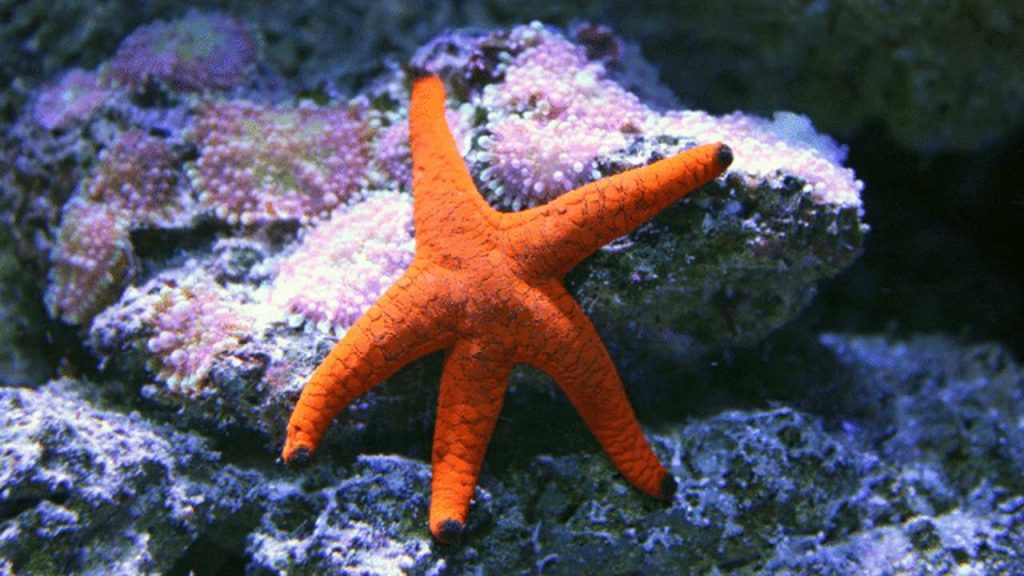
Characteristics of Phylum Echinodermata:
Characteristics of Phylum Echinodermata include:
1. Their bodies are radially symmetrical.
2. They are aquatic organisms found mainly in marine habitats.
3. They are triploblastic animals.
4. They are acoelomates.
5. They have no head or brain, and their bodies are not segmented.
6. They have spiny skin and tube feet used for movement.
7. Body is covered by a delicate epidermis with an endoskeleton of calcareous plate underneath.
8. They are used as bait for fishing.
9. They reproduce sexually through gametic fusion and asexually through regenerationIn Biology, regeneration is the natural process of replacing or restoring damaged or missing cells, tissues, organs, and even entire body parts to full function in plants and animals. More.
10. Examples include Starfish, Sea urchin, Sea cucumber, Brittle star, Sand dollars, and Sea daisies.