For Nigerian students hoping to study abroad on a fully funded Master’s scholarship, Erasmus Mundus is not just an opportunity on paper. Nigerian students have been winning these scholarships in significant numbers.
In the 2025/2026 academic year alone, 83 Nigerians received fully funded Erasmus Mundus scholarships, according to the European Union Delegation to Nigeria. One recent recipient is UNN graduate Chineye Okoli, who is now studying Groundwater Management and Global Change through Erasmus Mundus.
But applying for Erasmus Mundus is different from completing one general scholarship form. You first need to find an Erasmus Mundus Joint Master that fits your academic background and career plans, then apply directly to the consortium running that programme.
That distinction matters. A strong academic record can help, but successful applications are also about programme fit, preparation and showing clearly why your previous experience and future goals belong in the programme you have chosen.
What Is the Erasmus Mundus Scholarship?
Erasmus Mundus Joint Masters are international Master’s programmes jointly designed and delivered by universities in different countries under the European Union’s Erasmus+ programme.
Students normally study at more than one university and country during the programme. Full scholarships are available to highly ranked applicants from around the world, including Nigerians.
For a detailed explanation of the scholarship amount, mobility requirements, programme duration and funding, read our Erasmus Mundus Scholarships 2027 guide.
Can Nigerian Students Apply for Erasmus Mundus?
Yes. Erasmus Mundus Joint Masters accept applications from students around the world, and Nigeria has developed a particularly strong record in the programme.
The European Union Delegation to Nigeria reported that 104 Nigerian students secured places under Erasmus Mundus for the 2025/2026 academic year, including 83 who received fully funded scholarships. Nigeria remained the leading participating African country.
This does not mean selection is easy. Erasmus Mundus scholarships are competitive internationally, so Nigerian applicants still need to build applications that fit the particular Master’s programme they are targeting.
How Erasmus Mundus Applications Actually Work
There is no single Erasmus Mundus scholarship application covering every Master’s programme.
The process is generally:
- Search the Erasmus Mundus Joint Masters catalogue.
- Identify programmes that fit your previous degree, interests and career plans.
- Visit the official website of each programme.
- Check its academic, language and other eligibility requirements.
- Check whether Erasmus Mundus scholarships are available for your intended intake.
- Prepare the documents required by that particular programme.
- Submit your application directly according to the programme’s instructions.
The European Commission says applications are submitted directly to the institution running the chosen programme. In most cases, applications are made between October and January for programmes beginning in the following academic year, although individual programmes set their own deadlines.
Explore Erasmus Mundus Joint Masters on the official Erasmus+ website.
1. Choose a Programme That Fits Your Background
One of the most important decisions happens before you start writing a motivation letter: choosing the right programme.
Do not apply simply because a Master’s has an Erasmus Mundus scholarship attached to it. Read the programme curriculum, entry requirements, participating universities, specialisations and intended outcomes.
Then ask yourself whether you can convincingly connect the programme to:
- your previous degree;
- relevant coursework or research;
- internships and professional experience;
- volunteering or projects;
- your current interests; and
- what you want to do after the Master’s.
You do not necessarily need every one of these. What matters is whether your overall application gives the selectors a convincing reason why this particular programme makes sense for you.
2. Read the Requirements for Each Programme Carefully
Erasmus Mundus is an umbrella for many different Joint Masters. Individual programmes can set different academic, language and document requirements.
Depending on the programme, an application may require documents such as academic transcripts, degree certificates, a CV, motivation letter, recommendation letters, proof of English proficiency or other programme-specific material.
Do not treat a document list from another Erasmus Mundus programme as the requirements for yours. Always use the official website of the programme you are applying to.
3. Make Your Motivation Letter Specific
A generic statement about wanting to study abroad is unlikely to show why you belong in a particular Master’s programme.
Before writing, study the programme carefully. Think about the relationship between what you have already done and what the Master’s is designed to teach.
A strong application should help the reader understand why you are interested in the field, what in your academic or professional history supports that interest, why you selected the particular Erasmus Mundus programme, what relevant skills or experiences you have developed, and what you hope to do with the training afterwards.
The answers should come from your own history rather than from a generic scholarship template.
4. Build Relevant Experience Before You Apply
If you identify an Erasmus Mundus programme months before its deadline, use that time deliberately.
Depending on your field, relevant preparation could include research, internships, professional work, volunteering, projects, leadership, short courses or other activities that genuinely develop skills connected with the programme.
The goal should not be to collect activities merely to make your CV longer. Relevant experience is more useful when you can explain what you did, what you learned and how it connects with your proposed Master’s study.
5. Choose Referees Who Know Your Work
If your chosen programme requires recommendation letters, approach potential referees early.
A lecturer, supervisor or professional contact who knows your academic work, research, projects or professional abilities may be able to provide a more useful recommendation than someone who knows little about what you have actually done.
Give referees enough time and provide any information they need about the programme, your background and the deadline.
6. Learn From Alumni and Previous Awardees
Programme websites tell you the official requirements. Alumni can sometimes help you understand what studying in the programme is actually like and how they approached the application.
If you contact an alumnus, ask specific questions after reading the official information yourself. Do not expect an alumnus to complete your application for you.
What Nigerian Students Can Learn From Chineye Okoli
A recent Nigerian Erasmus Mundus scholar provides a useful example of why academic excellence should be combined with deliberate preparation.
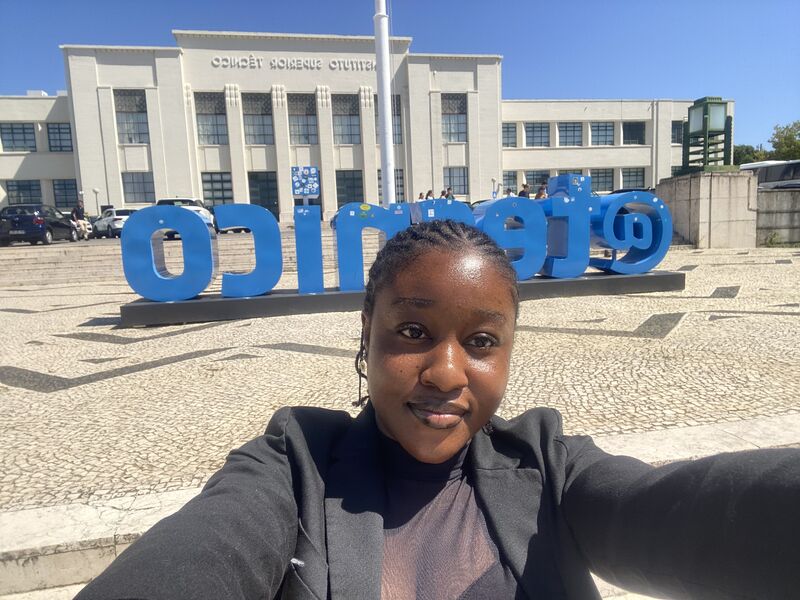
Chineye Okoli, a graduate of the University of Nigeria, Nsukka, secured an Erasmus Mundus scholarship to study Groundwater Management and Global Change (GroundwatCH) at Instituto Superior Técnico.
In her own account of the journey, Okoli explained that doing well academically had come relatively easily to her for much of her education. After graduation, however, she found herself competing in a much larger pool of highly capable people.
She wanted a scholarship and believed she was capable of securing one, but admitted that she initially expected doing the bare minimum to be enough. Her first attempt to secure a scholarship for her Master’s was unsuccessful.
She approached her second attempt differently. Okoli said she searched extensively for resources that could help her stand out. When she felt she was not getting the kinds of experiences that would make her application competitive, she created opportunities for herself. She also sought support from mentors and received recommendation letters from people willing to support her application.
Her experience does not provide a formula that guarantees an Erasmus Mundus scholarship, but it illustrates an important distinction for applicants: having a strong academic record is not the same as preparing a strong application.
As Okoli put it when reflecting on the experience, “wanting something badly is not the same as preparing yourself to receive it.”
For prospective applicants, the practical lesson is to start early, understand what your chosen programme is looking for, look honestly at gaps in your profile and use the time before the deadline to strengthen the areas you can genuinely improve.
You can read Chineye Okoli’s full Erasmus Mundus story on LinkedIn.
You Do Not Necessarily Need a First-Class Degree
Stories about scholarship winners can sometimes create the impression that only first-class graduates should bother applying.
That is not a general Erasmus Mundus rule. The official eligibility requirement is normally to hold a first higher-education degree, or be in the final year and graduate before the Master’s begins, while each individual programme sets its own additional admission requirements.
Nigerian Erasmus Mundus awardee profiles also include graduates with second-class upper degrees. What matters is whether you meet the requirements of your chosen programme and how competitive your complete application is.
Can Final-Year Nigerian Students Apply?
Yes, in principle. Erasmus+ states that students in the final year of their Bachelor’s studies may apply, provided they graduate before the Master’s programme starts.
You must still check the rules of the individual Joint Master because it may specify how final-year applicants should provide transcripts, expected graduation evidence or other documents.
Erasmus Mundus Scholarships to Explore for 2027
KofaStudy is tracking individual Erasmus Mundus programmes as their 2027 application information becomes available. Current guides include:
- Erasmus Mundus GLOCAL Scholarship 2027
- Erasmus Mundus GLOBE Scholarship 2027
- Erasmus Mundus PlantHealth Scholarship 2027
- Erasmus Mundus NOHA Scholarship 2027
You can also read our Erasmus Mundus Scholarships 2027 overview for more information about funding, eligibility, study mobility and how the scholarship works.
When Should You Start Preparing?
Before applications open, if possible.
The European Commission says Erasmus Mundus applications are submitted between October and January in most cases, but individual Master’s programmes determine their own application periods and deadlines.
Starting early gives you time to identify programmes that genuinely match your profile, understand their requirements, contact referees and prepare programme-specific applications rather than rushing several generic submissions near the deadline.
A Practical Erasmus Mundus Application Checklist
- Search the official Erasmus Mundus catalogue.
- Shortlist programmes that genuinely match your academic background and goals.
- Read each programme’s eligibility rules separately.
- Check the scholarship availability and exact deadline for the intake.
- Study the programme curriculum and objectives before writing your application.
- Prepare every required document according to the programme’s instructions.
- Make your motivation letter specific to the programme.
- Contact referees early if recommendations are required.
- Use relevant academic, research, work, project or volunteering experience to demonstrate programme fit.
- Proofread your application and submit before the deadline.
The Main Lesson for Nigerian Applicants
Erasmus Mundus is highly competitive, but Nigerian students are already succeeding in significant numbers.
The best place to begin is not by asking, “How do I win Erasmus Mundus?” It is by finding a programme for which you can build a convincing application.
Choose carefully, understand what the programme is looking for, prepare early and make the connection between what you have done, what you want to study and what you hope to do next clear throughout your application.
Frequently Asked Questions
Can Nigerian students apply for Erasmus Mundus scholarships?
Yes. Erasmus Mundus Joint Masters accept applicants from around the world, including Nigeria. Nigerian students have also been among the leading African beneficiaries of the programme.
Do I need a first-class degree for Erasmus Mundus?
Not as a general Erasmus Mundus requirement. Applicants normally need a Bachelor’s degree or recognised equivalent, while individual Master’s programmes set their own academic requirements. Nigerian Erasmus Mundus awardees include graduates with different qualifying degree classifications.
Can I apply for Erasmus Mundus while in my final year?
Yes. Erasmus+ says final-year Bachelor’s students may apply, provided they graduate before the Master’s programme begins. You should still check the specific requirements of your chosen programme.
Is there one application form for all Erasmus Mundus scholarships?
No. You select an Erasmus Mundus Joint Master and apply directly according to the instructions of the institution or consortium running that programme.
When do Erasmus Mundus applications open?
Application dates vary. The European Commission says applications are made between October and January in most cases for programmes beginning the following academic year, but each Master’s programme sets its own deadline.
How much is the Erasmus Mundus scholarship?
Current Erasmus Mundus funding can provide €1,400 per month for the duration of the Master’s programme, up to 24 months. Scholarship holders are also not charged tuition or other mandatory participation costs by the programme.
Can I apply to more than one Erasmus Mundus programme?
Erasmus Mundus consists of separate Joint Master’s programmes with their own application processes. Check the rules of each programme you are considering and submit separate applications according to their requirements.