

For many Nigerian students, studying at a foreign university traditionally meant leaving Nigeria.
That usually came with more than tuition fees. Students and their families also had to consider visa costs, international travel, accommodation abroad, exchange rates and the cost of living in another country.
But another model of international education is beginning to develop in Nigeria.
It is called Transnational Education (TNE).
Under Transnational Education, education crosses national borders even when the student does not necessarily do so. A foreign university may establish a branch campus in Nigeria, deliver an online degree with approved support facilities in Nigeria, work with a Nigerian institution to deliver programmes locally or use another approved arrangement.
Nigeria now has a formal regulatory framework for this, and foreign university provision has already begun appearing on the National Universities Commission’s official TNE register.
But there is something important for students and parents to understand from the beginning: “foreign university in Nigeria” does not describe one type of university experience.
One student could physically attend a foreign university’s branch campus in Gombe State. Another could study an American university programme largely online from home while using a learning centre in Lagos for internet access, computers and other support.
Both can fall within Nigeria’s Transnational Education framework.
So what exactly is Transnational Education, how do the foreign universities already operating under the Nigerian framework actually teach their students, and what should parents verify before paying for one of these programmes?
What Is Transnational Education?
The National Universities Commission (NUC) describes Transnational Education as higher education in which people, programmes, institutions, providers, knowledge or educational services move across national boundaries.
In simple terms, the education crosses the border even when the student may remain in Nigeria.
That can happen in several ways.
A foreign university can establish a physical branch campus in Nigeria. A Nigerian institution may deliver a programme connected to a foreign university. Students may complete different parts of a programme in different countries. Other programmes may use distance or blended learning supported by facilities in Nigeria.
The NUC’s framework includes six broad TNE models: branch campuses, franchise arrangements, twinning or articulation, open and distance learning, merger or acquisition, and teaching institutions.
This means a foreign university’s presence in Nigeria should not automatically be imagined as a conventional university campus filled with lecture halls and lecturers.
Why Is Nigeria Introducing Transnational Education?
One major reason is access.
Demand for university education in Nigeria is enormous, while studying overseas is beyond the financial reach of many families.
The NUC says TNE can expand access to higher education while encouraging collaboration between Nigerian institutions and universities in other countries. Potential benefits include technology transfer, international academic networks and improvements in teaching and research.
It could also give some students access to international education without requiring them to relocate overseas and bear the full financial cost of living in another country.
But the policy is not simply about importing foreign degrees. TNE partnerships can also involve research, faculty development, curriculum development, technology, skills training and collaboration with industry.
Which Foreign Universities Currently Operate in Nigeria Under TNE?
As of September 2026, the NUC’s official Transnational Education register contains two institutions:
| Foreign Institution | Location | NUC TNE Model | Established |
|---|---|---|---|
| Lincoln University Malaysia, Kumo Campus | Kumo, Gombe State | Branch Campus | 2025 |
| Brigham Young University–Idaho, USA | Opebi, Lagos State | Teaching Institution | 2026 |
These two entries are particularly useful because they demonstrate how different Transnational Education models can be in practice.
What Does Studying at These Foreign Universities Actually Look Like?
This is perhaps the most important question for a parent considering TNE.
If your child enrols, where do they actually study? Do they attend lectures every day? Are the lecturers physically in Nigeria? Is the programme online? Who designs the courses? And whose university name ultimately appears on the degree?
Lincoln University Malaysia’s Kumo Campus and the Brigham Young University–Idaho arrangement in Lagos provide two very different answers.
Lincoln University Kumo: A Physical Foreign Branch Campus
Lincoln University Malaysia’s operation in Kumo, Gombe State, is the more conventional of the two models.
The NUC classifies it as a Branch Campus.
Lincoln University College in Malaysia announced in November 2025 that it had received an operational licence from Nigeria’s National Universities Commission and Federal Ministry of Education to establish the Kumo campus and offer undergraduate and postgraduate programmes in Nigeria.

For a prospective student, the practical point is straightforward: this is intended as a physical university campus in Kumo, not simply a Malaysian online degree that Nigerian students access from their homes.
Students enrolling in the branch-campus model should therefore expect their university experience to be centred on the Kumo campus, subject to the delivery arrangements of their particular programme.
This is quite different from the second institution on the NUC register.
BYU-Idaho in Lagos: Online Study With a Nigerian Support Centre
The NUC does not classify Brigham Young University–Idaho’s Opebi operation as a branch campus.
It is listed as a Teaching Institution.
The distinction becomes much clearer when we look at how the associated BYU-Pathway Worldwide model actually operates.
Nigeria was already a major market for BYU-Pathway before its appearance on the NUC’s TNE register. BYU-Pathway’s 2025 figures show that it served 19,011 students in Nigeria, making Nigeria its second-largest enrolment country after the United States.
That helps put the Nigerian development into perspective. This is not simply an overseas education provider entering a small new market. Thousands of Nigerian students were already participating in the wider BYU-Pathway system before the current Nigerian TNE arrangement appeared on the NUC register.
BYU-Pathway states that its courses are completely online and can be taken from home. BYU-Idaho also explains that students in its online programmes complete courses created by BYU-Idaho faculty while receiving student services and support through BYU-Pathway Worldwide.
There is nevertheless a significant physical presence in Lagos.
In February 2025, The Church of Jesus Christ of Latter-day Saints, which sponsors BYU-Pathway, opened a Global Education Center in Lagos capable of accommodating up to 500 students.
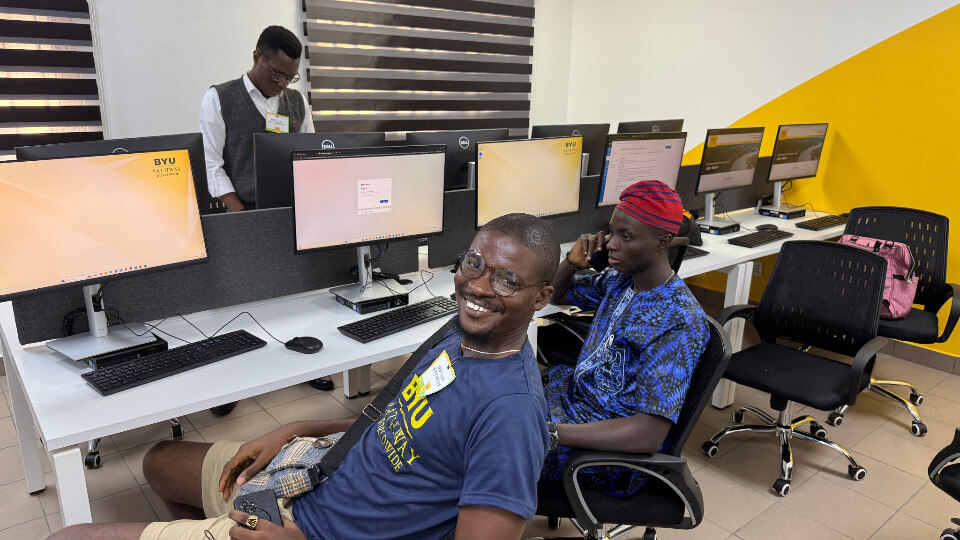
But the organisation makes an unusually important clarification about the facility: the centre is not itself a school and does not employ teachers to teach students there.
Instead, it provides facilities that students studying through BYU-Pathway can use, including electricity, internet access, computers and other resources that can make online university study easier.
So a student should not imagine the BYU model as travelling to Opebi every morning for conventional lectures delivered by American professors in a Lagos classroom.
The academic programme is fundamentally online.
How Does a BYU-Pathway Student Actually Learn?
BYU-Pathway’s learning model helps explain why a Teaching Institution can be very different from a traditional university campus.
Students complete online coursework that can include assignments, discussions, quizzes and projects. In the PathwayConnect portion of the programme, students also participate in structured gatherings that can be virtual or held locally.
The academic instructor is not simply a lecturer standing in front of students at the Lagos centre. The learning model combines online academic instruction with student support, peer interaction and local or virtual gatherings.
For a Nigerian student, this means much of the university experience can take place from home, while physical facilities and organised support remain available locally.
Who Awards the BYU Degree?
This is another distinction parents should understand.
BYU-Pathway Worldwide provides the online education pathway and student support, but it states that degrees are awarded by Brigham Young University–Idaho and Ensign College, depending on the programme.
BYU-Idaho similarly states that its online students complete courses created by BYU-Idaho faculty through BYU-Pathway Worldwide.
Prospective students should therefore confirm the awarding institution for the exact degree they intend to study rather than assuming that every programme carries the same university name.
Lincoln Kumo and BYU Lagos Compared
The difference between the two current NUC-listed institutions shows why parents should ask about the delivery model, not merely whether a foreign university has been approved.
| Question | Lincoln University Kumo | BYU / Opebi |
|---|---|---|
| NUC model | Branch Campus | Teaching Institution |
| Main learning environment | Physical university campus in Kumo | Primarily online |
| Study from home? | Not presented as an online-only model | Yes |
| Nigerian physical presence | University branch campus | Education/support centre and facilities |
| Conventional lecturers at Nigerian centre? | Branch-campus teaching model | The Lagos Global Education Center says it does not employ teachers to teach there |
| Foreign institution | Lincoln University College, Malaysia | BYU-Idaho within the BYU-Pathway education system |
| Degree awarding | Confirm for the specific Lincoln programme | BYU-Idaho or Ensign College, depending on programme |
This is perhaps the clearest illustration of what Transnational Education means in practice.
A student can remain in Nigeria under either arrangement but have a completely different university experience.
A Branch Campus Is Not the Only TNE Model
The Lincoln and BYU examples show why the terminology used by the NUC matters.
Under Nigeria’s TNE framework, international education can take forms involving branch campuses, franchise arrangements, teaching institutions, articulation or twinning arrangements, distance learning and other approved structures.
For students, those differences can affect:
- where they physically study;
- whether classes are face-to-face, online or blended;
- who teaches them;
- who designs and assesses the programme;
- whether part of the programme takes place overseas; and
- which institution ultimately awards the qualification.
That leads to one question every prospective student should ask before enrolling:
Who exactly will award my degree?
Does TNE Always Mean You Receive a Foreign Degree?
Not automatically.
The answer depends on the particular arrangement.
Some TNE models can lead directly to a qualification awarded by the foreign institution. Other collaborative arrangements may work differently.
Students should therefore avoid choosing a programme simply because an advertisement contains words such as international, foreign partnership, UK programme or American university.
Instead, establish which institution awards the qualification, what relationship exists between the Nigerian and foreign institutions, whether the arrangement has the required Nigerian regulatory approval and whether the particular programme being advertised is covered by that approval.
Are All BYU-Pathway Programmes Approved in Nigeria?
Students should not make that assumption.
Public statements surrounding the 2026 Nigerian approval say that NUC recognition covers six bachelor’s programmes within the Nigerian operation.
However, a clear authoritative public list identifying those six programmes was not available at the time of this article.
BYU-Pathway offers a wider range of degrees internationally, but that does not mean students should assume every programme in its global catalogue is covered by the current Nigerian approval.
Before enrolling, a Nigerian student should ask for confirmation that the specific degree programme they intend to study is included in the NUC-approved arrangement.
More Foreign University Projects Are Being Developed
Nigeria’s current NUC register is still small, but several larger international projects show how quickly the landscape could develop.
It is important, however, to distinguish institutions already appearing on the official TNE register from projects that are proposed, exploratory or still being developed.
University of Birmingham and University of Lagos
In January 2026, the University of Birmingham and the University of Lagos strengthened their partnership with plans to develop proposals for a Transnational Education Unit in Lagos.
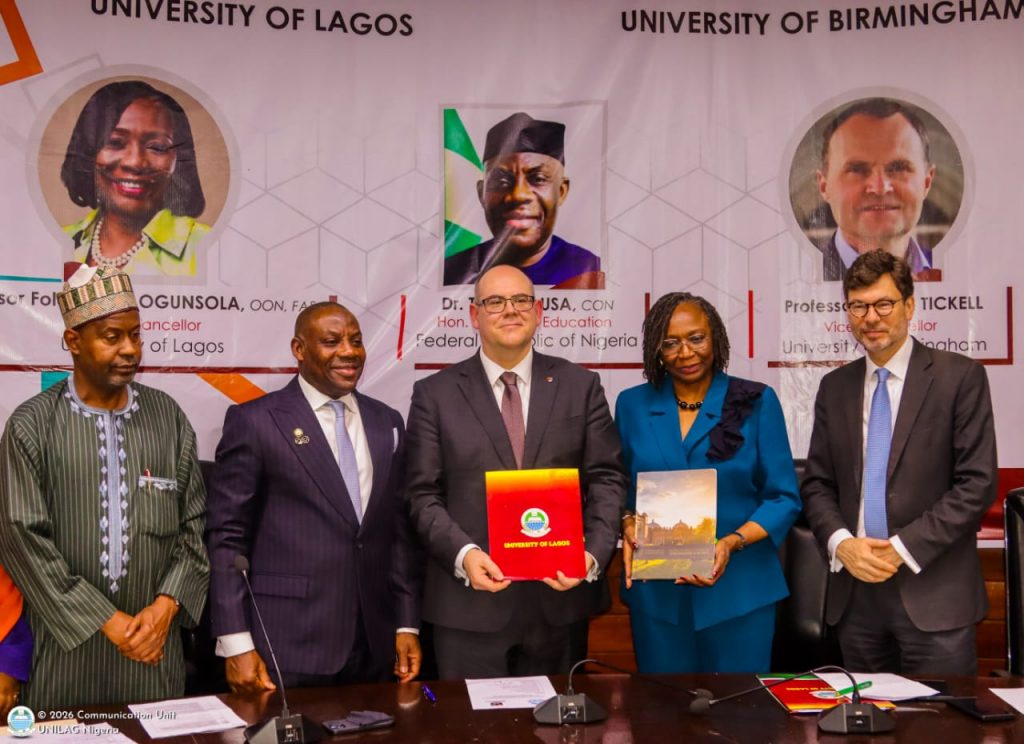
The institutions say the ambition is to begin programme delivery from 2027, subject to further agreements.
Possible programme areas being considered include Applied Artificial Intelligence and Digital Communications & Media.
This should not currently be described as the University of Birmingham simply opening a conventional Nigerian branch campus.
It remains a developing TNE initiative involving Birmingham, UNILAG and Nigeria’s education authorities.
Coventry University Campus Proposed for Lagos
Another significant development involves Coventry University in the United Kingdom.
In March 2026, the Federal Government announced plans for a proposed Coventry University campus at Alaro City, Lagos State.
The proposed campus is intended to offer bachelor’s and master’s programmes in areas including Science, Technology, Engineering, Mathematics and Medicine, Business, and Technical and Vocational Education and Training.
However, students should notice the word proposed.
Implementation was announced subject to regulatory approval, and Coventry University does not currently appear among the institutions on the NUC’s published TNE register.
Until the necessary approvals and admissions arrangements are confirmed, prospective students should not treat an announced launch timetable as evidence that applications are open.
Harrisburg University and Nigeria’s Interest in STEM
Nigeria is also exploring possible partnerships with institutions in the United States.
In September 2026, Education Minister Dr Maruf Tunji Alausa visited Harrisburg University of Science and Technology in Pennsylvania as the two sides explored possible educational collaboration.
The visit included discussions around STEM education, student pathways and workforce development, as well as exposure to Harrisburg University’s health sciences, advanced manufacturing, Smart Factory and robotics facilities.
But there is an important distinction for prospective students:
There is currently no announced Harrisburg University campus or admission programme in Nigeria.
At this stage, this represents exploratory partnership activity rather than an opportunity students can currently apply for.
Why AI, Technology and Advanced Skills Keep Appearing
The subjects appearing in some of these newer partnerships are not accidental.
Nigeria is not only looking for additional university places. There is growing emphasis on disciplines connected to technology, industry and future workforce needs.
The developing Birmingham–UNILAG initiative is considering Applied AI, while other international discussions have included areas such as robotics, advanced manufacturing, digital technology and health sciences.
The long-term value of TNE could therefore extend beyond giving Nigerian students an international qualification without relocating abroad.
Well-designed partnerships could also provide access to specialised curricula, research relationships, teaching expertise, laboratories, technology and industry connections that are expensive for individual institutions to develop independently.
Is Studying at a Foreign University in Nigeria Cheaper Than Studying Abroad?
Potentially — but that does not necessarily mean every programme will be cheap.
A Nigerian student studying locally may avoid major expenses associated with relocating abroad, including international flights, visa and immigration costs, overseas accommodation and some of the higher living expenses associated with studying in countries such as the United Kingdom or United States.
The delivery model can also affect cost significantly.
An online programme supported by a local learning centre has a very different cost structure from maintaining a conventional foreign branch campus with classrooms, laboratories and other physical facilities.
However, parents should not assume that every TNE programme will automatically be affordable simply because the student remains in Nigeria.
Compare the complete cost of the programme, including tuition, technology charges, accommodation where necessary, professional fees, learning materials and any period of study that must be completed overseas.
Will a TNE Degree Be Recognised in Nigeria?
Recognition should be checked carefully before enrolment.
The NUC regulates university education in Nigeria and has created the TNE framework specifically to bring cross-border university provision into a formal quality-assurance system.
The Commission also maintains a public register of recognised Transnational Education institutions and has stated that Nigerian private universities cannot engage in TNE without NUC approval.
But students should not reduce this to the assumption that anything advertised as a TNE programme is automatically recognised.
There are several separate questions:
- Is the institution approved?
- Is the specific programme covered by the approval?
- Which institution awards the degree?
- Does the programme require separate professional accreditation?
This distinction is particularly important for regulated professional programmes such as Medicine, Nursing, Engineering and Law.
What About NYSC?
This deserves particular caution.
Students should not assume that studying physically in Nigeria under a foreign-university arrangement automatically produces the same NYSC treatment as studying at a conventional Nigerian university.
Nor should they automatically assume that every programme will be treated exactly like a degree completed overseas.
TNE can operate through several different models, and Nigeria’s current framework is relatively new.
Public statements surrounding BYU-Pathway’s Nigerian recognition have linked NUC approval with enabling Nigerian graduates to access opportunities such as national service. However, prospective students should still confirm the current NYSC position for their specific programme and qualification rather than relying on a general assumption.
The safest approach is to confirm the position with the institution and the relevant Nigerian authorities before enrolling, particularly where NYSC participation or exemption will matter for future employment.
12 Questions Parents Should Ask Before Paying for a TNE Programme
NUC approval is an important starting point, but a parent still needs to understand exactly what they are buying.
- Where will my child physically study? Is there a conventional campus, local teaching centre or mainly online study from home?
- How many days must the student attend physically? Do not assume that having a Nigerian address means daily campus teaching.
- Is teaching face-to-face, online or blended? Ask for the actual delivery structure of the programme.
- Who teaches the students? Are lecturers employed locally, based at the foreign university or teaching online?
- Who designs the curriculum, sets examinations and marks assessments?
- Which institution awards the final degree? Get the answer in writing.
- Is this exact programme covered by the NUC-approved arrangement? Institutional approval should not automatically be treated as approval for every course advertised by the provider.
- Does the programme require professional accreditation? This is especially important for regulated fields such as Medicine, Nursing, Engineering and Law.
- What is the current NYSC position for graduates of this exact programme?
- Must any part of the degree be completed overseas? If so, ask who pays for travel, visas, accommodation and foreign living expenses.
- What is the complete cost? Ask about tuition, technology charges, accommodation, examinations, professional fees, materials and other compulsory expenses.
- What happens if the international partnership ends while my child is studying? Ask how enrolled students would complete their degrees and which institution would remain responsible for them.
How to Check Whether a Foreign University in Nigeria Is Legitimate
The first place to check is the National Universities Commission.
The NUC maintains a public list of Transnational Education institutions.
Check the NUC Transnational Education Institutions Register
But finding the institution’s name on the register should be the beginning of the investigation rather than the end.
Verify the particular programme, awarding institution, delivery arrangement and any additional professional accreditation that applies.
Be Careful With “Foreign University” Advertising
The growth of TNE could also create opportunities for misleading advertising.
A training centre having an agreement with an organisation overseas does not automatically make it an approved foreign university campus.
Likewise, phrases such as internationally recognised, UK-affiliated, American degree, foreign-accredited or study abroad from Nigeria do not by themselves establish Nigerian regulatory approval.
The NUC’s TNE framework is important partly because it creates a formal route through which foreign university provision can be evaluated and quality-assured.
If a provider cannot clearly explain its NUC status, programme approval, foreign awarding institution, teaching model and the exact qualification a student will receive, obtain those answers before paying fees.
What Are the Potential Benefits for Nigerian Universities?
Students are only one part of the TNE story.
International university partnerships can also involve joint research, faculty development, curriculum development, student exchanges, technology and knowledge transfer, stronger international research networks and collaboration with industry.
The University of Birmingham and UNILAG, for example, describe their developing partnership as involving education and research rather than simply importing an overseas course into Nigeria.
This matters because successful Transnational Education can strengthen local institutions as well as provide international qualifications.
If international partnerships merely sell expensive degrees in Nigeria without transferring knowledge, building research capacity or responding to local needs, much of the wider potential of TNE would be lost.
What Could Transnational Education Mean for Nigerian Students?
If properly regulated and implemented, TNE could gradually create another route between two traditional choices.
Until now, many students have effectively had to choose between studying at a Nigerian university and travelling overseas for an international education.
Transnational Education creates possibilities between those two options.
A student may attend a physical foreign branch campus in Gombe State. Another may remain at home in Lagos while completing an American online degree and using a local education centre when they need internet, computers or other learning support. Future students may enrol in programmes delivered jointly by Nigerian and overseas universities.
That flexibility could reduce some of the costs and barriers associated with international education.
But it also makes verification more important.
Not every foreign university arrangement is the same. Not every programme is delivered the same way. Not every international partnership leads to the same qualification. And an announcement that a foreign university is considering Nigeria is not the same as an approved programme accepting students.
For parents, perhaps the most useful question is therefore no longer simply, “Is this a foreign university?”
It is:
“What exactly will my child be studying, where will they study it, who will teach and assess them, who will award the degree, and is that exact programme recognised?”
As more international universities enter Nigeria, those questions will become increasingly important.
Frequently Asked Questions
Can I study at a foreign university without leaving Nigeria?
Yes. Nigeria’s Transnational Education framework allows approved forms of foreign university provision to operate in Nigeria. Depending on the model, a student may attend a physical foreign branch campus, study through an approved online arrangement supported locally or enrol in another approved partnership between Nigerian and foreign institutions.
Which foreign universities currently operate in Nigeria under TNE?
As of September 2026, the NUC’s published Transnational Education register contains Lincoln University Malaysia’s Kumo Campus, established as a Branch Campus in 2025, and Brigham Young University–Idaho’s Teaching Institution in Opebi, Lagos State, established in 2026.
Is Lincoln University Kumo an online university?
Lincoln University Malaysia’s Kumo operation is classified by the NUC as a Branch Campus. It is a physical foreign university campus in Kumo, Gombe State, rather than simply an online Malaysian degree accessed from Nigeria. Students should nevertheless confirm the delivery arrangements for their specific programme.
Do BYU students attend lectures at the Opebi centre every day?
The BYU-Pathway model is fundamentally online. BYU-Pathway states that its courses can be taken from home, while the Lagos Global Education Center provides facilities such as internet access, electricity and computers. The centre itself has stated that it is not a school and does not employ teachers to teach there.
Who awards degrees studied through BYU-Pathway?
BYU-Pathway states that degrees are awarded by Brigham Young University–Idaho and Ensign College, depending on the programme, while BYU-Pathway provides the online education pathway and student support. Students should confirm the awarding institution for their specific degree before enrolling.
Is Coventry University already operating in Nigeria?
The Federal Government has announced plans for a proposed Coventry University campus at Alaro City in Lagos, but implementation was announced subject to regulatory approval. Coventry University does not currently appear on the NUC’s published list of established TNE institutions.
Is the University of Birmingham opening a campus in Nigeria?
The University of Birmingham and University of Lagos are developing proposals for a Transnational Education Unit in Lagos, with an ambition to begin programme delivery from 2027 subject to further agreements. The initiative should not currently be described as an established Birmingham branch campus.
Will I receive a foreign degree if I study through a TNE programme?
It depends on the particular TNE arrangement. Different models can have different awarding arrangements. Before enrolling, confirm in writing which institution will award your degree, what qualification you will receive and what will appear on your certificate and transcript.
Are foreign university degrees earned in Nigeria recognised?
Recognition should be checked for the specific institution and programme. The NUC regulates Transnational Education in Nigeria and publishes a register of TNE institutions, but students should also verify that their particular programme is covered by the approval and check any professional accreditation required for regulated courses.
Can students from foreign universities in Nigeria participate in NYSC?
The position can depend on the institution, programme, qualification and TNE model. Prospective students should confirm the current NYSC treatment of their exact programme with the institution and relevant Nigerian authorities before enrolling rather than assuming that every TNE programme is treated identically.
How can I verify a foreign university in Nigeria before paying fees?
Start with the National Universities Commission’s Transnational Education register. Then confirm that your specific programme is covered by the approval, establish which institution awards the degree, understand how and where teaching takes place, and check professional accreditation and NYSC requirements where applicable.


