Home Economics is a practical field of study that teaches people how to manage themselves, their families, their homes and the resources available to them.
It combines knowledge and practical skills that are useful in everyday life, including food and nutrition, clothing and textiles, home management, consumer education, family living, housing and child care.

Home Economics is not simply about cooking or keeping a home. It helps people learn how to make informed decisions, use resources wisely, care for themselves and others, and develop skills that can also lead to careers and business opportunities.
Meaning of Home Economics
Home Economics can be defined as a field of study concerned with improving the well-being of individuals and families through the effective management of resources and the development of practical life skills.
These resources may be material resources, such as money, food, clothing and housing, or non-material resources, such as time, energy, knowledge and skills.
Home Economics therefore teaches people how to use the resources available to them to meet their needs and improve their quality of life.
Modern Home Economics is concerned with practical household issues, everyday living and responsible resource management, drawing knowledge from several disciplines.
Is Home Economics Only About Cooking?
No. Cooking and food preparation are only parts of Home Economics.
The subject covers a much wider range of everyday activities and decisions. A student studying Home Economics may learn how to:
- plan nutritious meals;
- manage money and other resources;
- choose and care for clothing;
- make informed decisions when buying goods and services;
- organise and maintain living spaces;
- understand family relationships;
- care for children;
- manage time and energy; and
- develop practical and entrepreneurial skills.
This is why Home Economics is often described as a practical or life-skills subject.
Is Home Economics Only for Girls?
No. Home Economics is for both male and female students.

Historically, Home Economics was strongly associated with women and homemaking. However, the modern field is concerned with skills and decisions that affect everyone.
Eating nutritious food, managing money, caring for clothing, making good purchasing decisions and managing available resources are useful skills regardless of gender.
Home Economics can therefore help both boys and girls become more independent and better prepared for adult life.
Areas of Home Economics
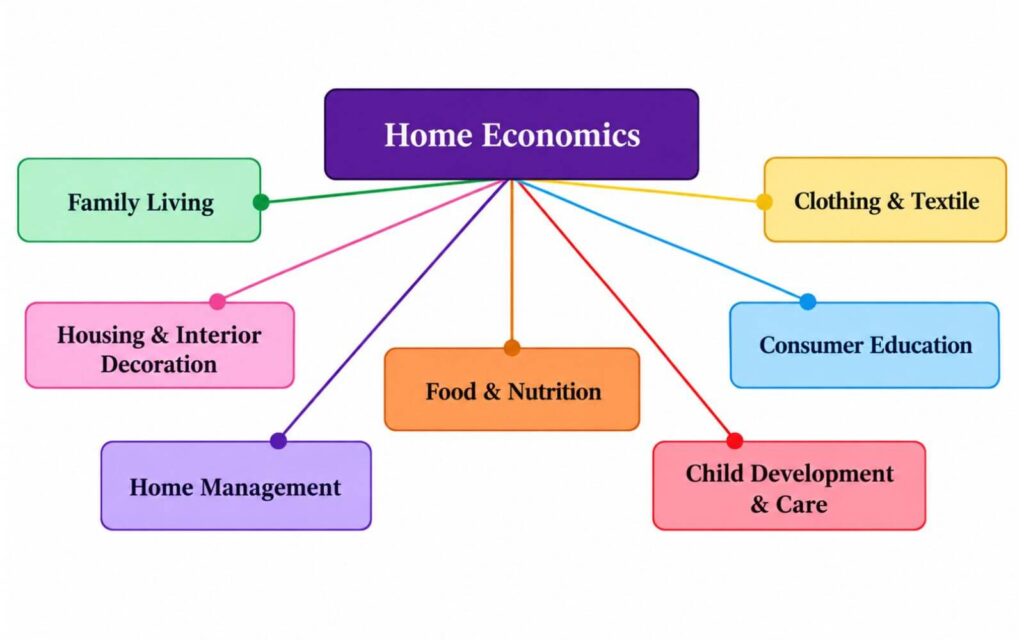
Home Economics is a broad subject with several interrelated areas.
NERDC curriculum material includes the scope or areas of Home Economics as an important part of learning the subject.
1. Food and Nutrition
Food and Nutrition deals with food, nutrients and their effects on the body.
It includes topics such as food selection, meal planning, food preparation, food preservation, food safety and the importance of nutrients for growth and good health.
Students can use this knowledge to make better decisions about what they eat and how food is handled.
2. Clothing and Textiles
Clothing and Textiles deals with fabrics, clothing and the skills involved in selecting, making and caring for clothes.
It may include sewing, mending, clothing construction, fabric selection and clothing care.
These skills can be useful in everyday life and may also provide a foundation for careers and businesses connected with fashion and textiles.
3. Home Management
Home Management is concerned with the effective use of resources to meet individual and family needs.
It includes managing money, time, energy and household resources, as well as organising activities within the home.
Good home management involves deciding what is needed, considering the resources available and using those resources wisely.
4. Consumer Education
Every time you compare two products, check a price, examine the quality of an item or decide whether something is worth buying, you are making a consumer decision.
Consumer Education teaches people how to make informed decisions when choosing and using goods and services.
It can also help consumers understand the importance of budgeting, comparing alternatives and obtaining value for their money.
5. Housing and Interior Decoration
This area deals with the home and how living spaces can be planned, organised and maintained.
It includes the selection and arrangement of furniture, use of available space, decoration and creating living environments that are comfortable and suitable for the people who use them.
6. Child Development and Care
Child Development and Care deals with how children grow and develop and how their needs change at different stages.
It also considers appropriate ways of caring for children and supporting their physical, emotional, social and intellectual development.
7. Family Living
Family Living deals with relationships between members of a family.
It helps students understand cooperation, responsibilities, communication and healthy relationships within nuclear and extended families.
Why Is Home Economics Important?
Home Economics is important because many of the decisions studied in the subject are decisions people make throughout their lives.
NERDC curriculum material specifically includes the importance of Home Economics to society as a learning objective.
Here are some of the major reasons Home Economics is important.
1. It Develops Practical Life Skills
Home Economics teaches skills that can be applied outside the classroom.
Preparing food, caring for clothes, managing resources, organising a home and making purchasing decisions are examples of skills people may use throughout their lives.
2. It Encourages Healthy Living
Knowledge of food and nutrition can help people understand the importance of balanced meals, food hygiene and appropriate food choices.
These skills can contribute to healthier individuals and families.
3. It Teaches Wise Management of Resources
Resources are limited.
Home Economics teaches people to consider their needs and available resources before making decisions.
This can include managing money, time, food, clothing, household materials and energy.
4. It Helps People Become Better Consumers
People regularly make decisions about what to buy and which services to use.
Consumer Education can help individuals compare alternatives, consider quality and price, avoid waste and make more informed purchasing decisions.
5. It Promotes Healthy Family Relationships
Family Living helps students understand communication, cooperation and responsibilities within families.
These skills can contribute to healthier relationships at home and in the wider community.
6. It Encourages Independence
Knowing how to prepare a meal, manage a budget, care for clothing or organise available resources makes a person less dependent on others for basic everyday tasks.
Home Economics therefore helps students develop confidence in managing aspects of their own lives.
7. It Develops Creativity and Problem-Solving Skills
Many Home Economics activities require students to work with the resources available to them.
For example, someone may need to prepare a nutritious meal within a limited budget, repair a damaged piece of clothing or organise a small living space efficiently.
Such situations encourage creativity and practical problem-solving.
8. It Can Prepare Students for Careers and Entrepreneurship
Skills learned through Home Economics can provide foundations for further education, employment and entrepreneurship.
NERDC includes careers as part of the study of Home Economics, while Home Economics syllabuses also connect areas such as Home Management, Foods and Nutrition, Clothing and Textiles, and Family and Child Development with different occupations.
Home Economics Skills You Can Use Every Day
One of the reasons Home Economics is useful is that you do not have to wait until you have a job to apply what you learn.
Imagine that you have a limited amount of money and need to prepare dinner for your family.
You may have to:
plan what to cook → check what is already available → make a budget → compare prices → buy ingredients → prepare the food safely → avoid unnecessary waste.
That single activity involves nutrition, consumer education, resource management, budgeting, food preparation and decision-making.
Other everyday Home Economics skills include reading food labels, sewing on a button, caring for clothes, organising a room, planning how to use your time and comparing products before buying them.
Home Economics therefore connects classroom learning with situations students encounter in everyday life.
Careers Related to Home Economics
Home Economics can also provide a foundation for many careers and businesses.
Depending on a person’s further education, training and professional qualifications, related career areas can include:
- nutrition and dietetics;
- catering and food services;
- hospitality;
- fashion design and clothing production;
- textile-related work;
- interior decoration and design;
- child care and early childhood education;
- teaching;
- counselling;
- consumer services;
- research; and
- entrepreneurship.
Some of these professions require university education, professional training, certification or other specialised qualifications.
Home Economics and Other Subjects
Home Economics does not exist in isolation.
It draws knowledge from several other fields.
For example, Biology and Chemistry can help us understand nutrition and changes that occur during food preparation. Mathematics is useful for budgeting, measurements and calculations. Economics helps us understand choices and the use of limited resources. Agricultural Science connects with food production, while Creative Arts can contribute to clothing and interior design.
This combination of knowledge helps make Home Economics an applied and practical subject.
Frequently Asked Questions
What is Home Economics?
Home Economics is a field of study that teaches people how to manage themselves, their families, their homes and available resources while developing practical skills for everyday life.
What is the simple meaning of Home Economics?
Simply put, Home Economics teaches us how to use knowledge, skills and available resources to improve everyday living and family well-being.
What are the major areas of Home Economics?
The areas include Food and Nutrition, Clothing and Textiles, Home Management, Consumer Education, Housing and Interior Decoration, Child Development and Care, and Family Living.
Why is Home Economics important?
Home Economics develops practical life skills, promotes healthy living, teaches wise resource management, improves consumer decision-making, supports family well-being and can prepare students for careers and entrepreneurship.
Is Home Economics only for girls?
No. Home Economics is useful for everyone. Both boys and girls benefit from learning skills such as nutrition, budgeting, consumer decision-making, clothing care and resource management.
What skills can students learn from Home Economics?
Students can learn skills related to food preparation, nutrition, budgeting, sewing and clothing care, consumer decision-making, home management, child care, family living and the effective use of resources.
Continue Learning Home Economics
Home Economics covers much more than its definition.
KofaStudy students can continue with the JSS1 Home Economics course to study the subject in greater detail, including its different areas, practical skills and related topics.